
In Borguna, a coastal district in Bangladesh, I ran a classroom for street children. It was a tin-roofed shed, dirt floor, no real walls to speak of. We had almost nothing to teach with. In the second week, one of the boys found a can of leftover paint from a fisherman’s boat. He drew a sun on the one wall we had. It came out uneven and too big, rays going in every direction. Nobody told him to. He just wanted the room to look like somewhere he wanted to be.

I think about that sun a lot. Not because it was a good design, but because of what it did. Kids who had been quiet for days started asking if they could draw something too. Within a month the shed did not look like a shed anymore. That was the moment I understood something, long before I had the words for it. Joy is not decoration on top of learning. It is part of what makes learning happen at all.
That is also, almost exactly, the idea I found waiting for me when I arrived at KID Museum this summer for the Frank Karel Fellowship. In a conversation early on, I heard the founder describe why the museum exists in the first place. Somewhere around the end of early childhood, school gets serious. Recess shrinks to thirty minutes. Grades start to count. The hands-on, messy, joyful way kids learn before that point gets replaced by something safer and more structured. It happens right when kids need that joy the most. KID Museum was built to hold onto that instinct on purpose, to let kids keep building, testing, and failing without a grade attached to any of it. I recognized that idea instantly. I had already watched it happen in reverse, back in Borguna.
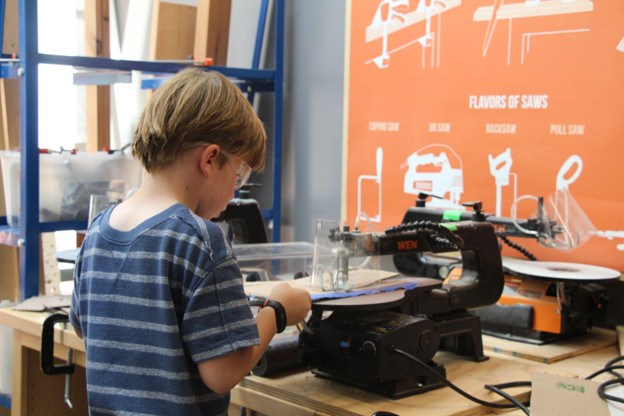
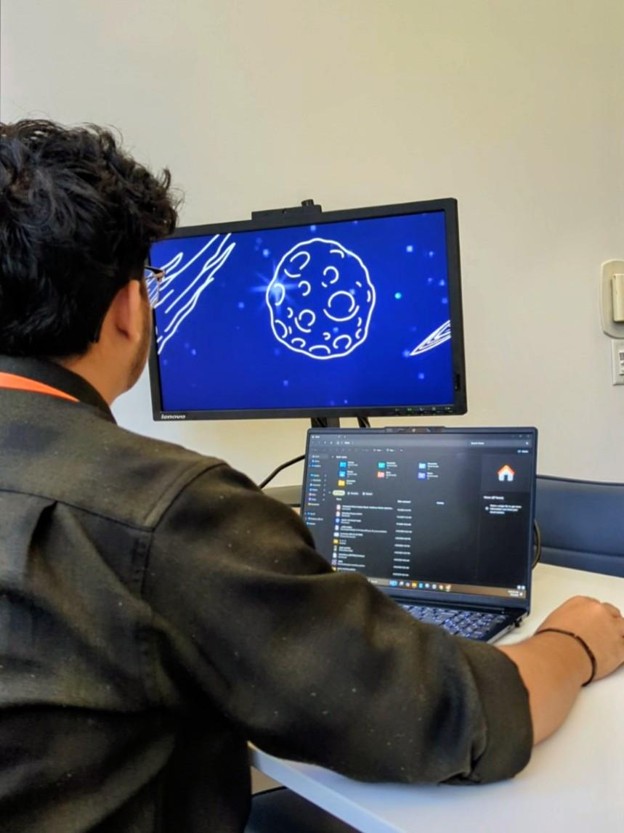
Somewhere around my second week, I noticed something I was not expecting to notice. The museum’s public-facing content didn’t look much like the museum I was watching in person. I mean the posts, the stuff a parent scrolls past on their phone before they ever walk through the door. Most of it lived inside one visual template. Simple white line doodles on a flat orange background. Clean, safe, repeated across almost everything. I started asking myself a question every time a new post went out. Would an eight-year-old or a parent stop scrolling for this doodle-like graphic, or would they stop for a video of another eight year old’s actual face lighting up over something they just built? I already knew the answer.

That question sent me into a year of platform data, trying to find out if my instinct held up outside my own head. It did. Posts with real kids and real moments consistently earned more attention than the templated graphics, by a wide margin. What struck me was not the gap itself. It was what the gap meant. The mission was fully alive inside the building. Every camp, every studio, every educator was living the exact philosophy the founder described to me. But that philosophy hadn’t fully made the trip from the building to the feed. Somewhere in scaling up communications, in trying to look consistent and professional, the same instinct had crept in: reach for the safe, the already proven. It was the very instinct the museum exists to interrupt kids.
I used to think that if an organization’s work was joyful, its communications would be joyful too, automatically, like the mission would just show up wherever the organization spoke. I know now that the mission does not travel on its own. It has to be carried, on purpose, by someone whose whole job is translating it for an audience that never sets foot inside the building. That is what public interest communications actually is. Not decoration on top of the real work. It’s the thing that decides whether the real work ever reaches the people it’s for.
So the question in the title is not really about KID Museum, or about any one organization. It’s the same drift that turns a five year old’s classroom into a ten year old’s exam room. It shows up wherever an institution grows, this quiet pull toward whatever is safe and already proven. It happens at the exact moment joy and experimentation are what the audience needs most. I’m spending the rest of this fellowship trying to notice that drift before it settles in, and pulling back toward the sun on the wall, on purpose, every time.